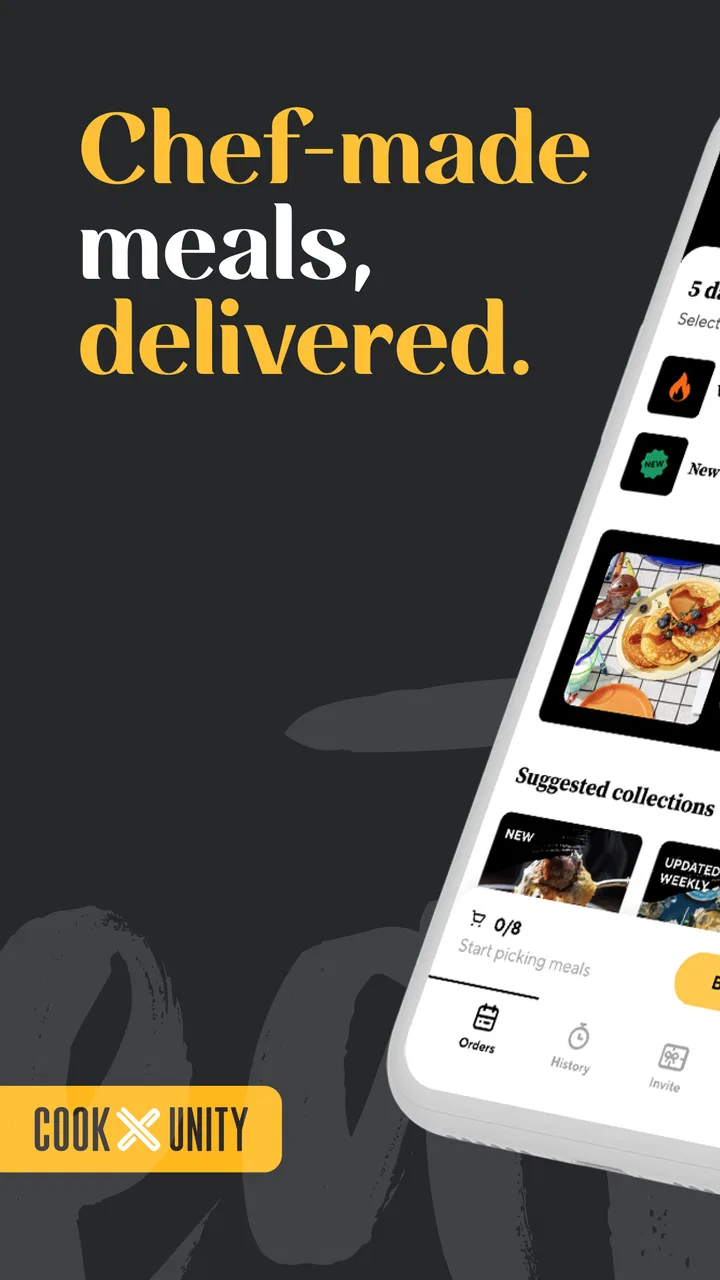
CookUnity - A Chef Marketplace
- 4.7
- Rating
- 100.00K
- Installs
- Free
- Price

 Analysis by App-foxy
I came away from CookUnity - A Chef Marketplace with a simple impression: it is most useful when I want a proper meal without turning dinner into another task. This Food & Drink app, made by CookUnity Inc., presents prepared meals created by chefs and arranged around delivery rather than asking me to plan recipes, shop for ingredients, and cook from scratch. That makes it feel less like a recipe tool and more like a practical answer to a busy week.
That distinction matters. I would not choose it because I want to learn cooking techniques or control every ingredient in a dish. I would consider it when convenience, variety, and a more considered meal matter more than the ritual of preparing food myself. After using it, my view is that its appeal depends heavily on how I organize my week and what I expect from a meal service. For the right person, it can remove a surprising amount of daily friction. For someone who enjoys grocery shopping or needs complete flexibility at the last minute, the usual alternatives may still be better.
What the CookUnity experience is really good at
The strongest part of the concept is the separation between choosing a meal and producing it. I can browse dishes through the app, make a decision based on what sounds appealing, and let the service handle the work that normally follows. That is a meaningful change from opening a recipe app, discovering that I am missing three ingredients, and then postponing dinner altogether.
You May Also Like

 Pandora - Music & Podcasts
Pandora’s Music Is Easy to Start, but Harder to Recover
Pandora’s strength is its low-effort path from a seed to a station. Its weak spot is how much confidence it asks you to place in connection, setup, and quiet recovery.

 AccuWeather: Weather Radar
AccuWeather Review: A Quick, Clear Forecast for Everyday Decisions
For everyday plans, the best forecast is the one you can understand quickly. AccuWeather makes rain timing, radar, and local conditions easy to act on, with a few trade-offs.

 Hill Climb Racing
Why Hill Climb Racing Still Turns Crashes Into One More Run
A tiny car, a bumpy hill and one more upgrade: Hill Climb Racing keeps resurfacing because its simple chaos makes every near-miss feel personal.

 AliExpress - Shopping App
AliExpress Makes Global Shopping Feel Personal, but Shoppers Bear the Risk
AliExpress turns a global marketplace into a pocket-sized discovery engine. Its reach is useful, its shopping loop compelling, and its trade-offs easy to miss.

 Lords Mobile: Kingdom Wars
Lords Mobile Is a Kingdom-Building Routine, Not a Quick Match
A case-by-case verdict on the building, battles, device demands, and social commitments that make Lords Mobile rewarding for some players and exhausting for others.

 PDF Scanner app - TapScanner
TapScanner Makes Paperwork Easier to Capture, Check, and Share
TapScanner makes scanning with a phone feel less like a rescue operation and more like a dependable step in getting work done. Its capture tools are useful, though not flawless.
More From Our News Desk
View All News


I also like that the chef-led approach gives the selection a more personal feel than a basic list of standardized ready meals. The point is not simply to find “something edible.” I am choosing between different cooking styles and flavor directions, which makes planning several meals feel less repetitive. Even when I am ordering for convenience, that sense of choice helps the experience feel less like settling.
The app’s store summary, “Chefs create, we deliver,” is brief, but it captures the central workflow accurately. The application is primarily a bridge between the chef-created meal and the person who wants it at home. That focus keeps it understandable. I do not have to treat it as a social network, a cooking course, or a complicated kitchen-management system.
In everyday use, the most valuable habit is to browse before I am hungry. When I wait until the last moment, convenience can turn into rushed decision-making. Looking through the available meals earlier lets me think about the coming days instead of choosing whatever seems acceptable after a long day. This is one of the less obvious strengths of the app: it works best as a planning tool, not merely as an emergency dinner button.
A realistic weeknight use case
Imagine getting home after work with enough energy to eat but not enough patience to cook. The normal choices might be takeaway, a supermarket ready meal, or an improvised snack. With CookUnity, I can make the meal decision ahead of time and avoid spending another part of the evening comparing menus. That does not make the service a replacement for every meal, but it can protect the part of the day when I most need simplicity.
For a person living alone, the value is especially easy to understand. Cooking a full recipe can create leftovers, unused ingredients, and washing-up for one meal. A prepared option can be more practical when I want a single-serving dinner and do not want to build an entire cooking project around it. I would still compare the overall cost with cooking at home, but I would also count the time saved and the ingredients I am not buying just to use once.
It can also help during a demanding week when my schedule changes from day to day. Instead of relying on the same fast-food order repeatedly, I can use the app to introduce more variety into the meals I have planned. The important trade-off is that convenience works best when I accept some loss of control. I am choosing from what is available rather than designing every detail myself.
Why the chef marketplace angle makes a difference
The chef marketplace idea gives the app a stronger identity than a generic prepared-food catalogue. I find it easier to stay interested when meals feel connected to distinct creators rather than presented as anonymous products. That does not guarantee that every dish will suit my taste, but it changes how I browse: I am looking for a meal I genuinely want, not merely the least inconvenient option.
There is also a useful psychological advantage. Repeating the same quick meals is one of the reasons home eating can become dull. A chef-oriented selection encourages me to try something outside my normal routine without asking me to buy a long list of unfamiliar ingredients. For people who want variety but lack the time or confidence to experiment in the kitchen, that is a convincing middle ground.
My practical tip is to judge the service over several meals rather than one. A single dish can be affected by personal taste, mood, or what I happened to want that day. The real question is whether the broader selection fits my habits. If I regularly find meals I would choose again, the app has a lasting role. If I keep searching and feeling that nothing matches, its central advantage disappears.
The friction I would not ignore
The biggest limitation is that convenience does not remove the need for decisions. I still have to browse, compare, and commit to meals. If I am very particular about ingredients, portion style, or preparation, the chef-marketplace format may leave me wishing for more control. A recipe app paired with a grocery order is slower, but it lets me adjust the dish to my exact preferences.
There is another trade-off in relying on prepared food: I am giving up the freshness and flexibility of cooking at the moment I want to eat. Someone who enjoys changing a recipe halfway through, adding extra vegetables, or adjusting seasoning may find the fixed-meal format restrictive. I appreciate the reduction in effort, but I would not pretend it offers the same creative control as my own kitchen.
The service can also be a poor match for highly spontaneous eating habits. If my plans change constantly, a meal selected in advance may not line up with my appetite later. In that situation, a local takeaway app can be more flexible because I can decide immediately, while a supermarket can be better for keeping adaptable ingredients on hand.
I would also think carefully about household needs. A person ordering for several family members may face more complicated preferences than the app’s chef-led choice can solve comfortably. One person may want a mild meal, another something completely different, and a third may reject the available options. Cooking one adaptable dish or shopping for several simple ingredients could be less frustrating in that case.
How it compares with cooking, takeaway, and supermarket meals
Compared with cooking from scratch, CookUnity saves planning and preparation time but gives me less control. Home cooking wins when I want to manage every ingredient, stretch a budget through batch cooking, or use food already in the cupboard. The app wins when the hidden cost of cooking is not just the recipe, but the decision-making, shopping, preparation, and cleanup surrounding it.
Compared with takeaway, the app feels more deliberate. Takeaway is usually the most immediate option, especially when I have not planned ahead. CookUnity is more appealing when I want convenience without making the same impulsive order again. The choice depends on whether I value immediate availability or a more organized meal routine.
Compared with supermarket ready meals, the chef marketplace positioning is the main point of difference for me. A supermarket is often easier for a last-minute purchase and may fit a quick errand naturally. CookUnity is more useful when I want to browse a dedicated selection and make meals part of a planned routine. Neither option is automatically superior; they solve different kinds of inconvenience.
One advanced way to use the app is to reserve it for the evenings when cooking is least realistic. I would not treat it as a universal replacement for groceries. Instead, I would identify the two or three nights that usually collapse into poor food choices and use the service to cover those pressure points. That approach makes the convenience more meaningful and avoids expecting one app to manage my entire diet.
Who should use it, and who should skip it
I think CookUnity is a strong fit for busy professionals, people living alone, and anyone who wants chef-created meals without spending the evening in the kitchen. It may also suit someone who enjoys trying different flavors but does not want to buy specialist ingredients for occasional experiments. The app is particularly persuasive for users who see time and mental energy as part of the cost of cooking.
I would recommend a more cautious approach for families with very different tastes, strict ingredient requirements, or a strong preference for cooking everything fresh. The same applies to people who mainly want the cheapest possible way to eat. In that case, planning groceries and cooking larger batches will often offer more control over spending and portions, even though it demands more effort.
It is free to download, and its content rating is Everyone, so the basic barrier to trying the app is low. On Android, it supports version 8.0 and later, which makes it accessible on many older devices as well as newer phones. The current release is version 2.42.3. I would still judge the service by whether the meal workflow suits me, rather than assuming broad device accessibility automatically makes it the right food choice.
What the numbers suggest about its reception
The app holds a 4.7 average from around 7.9 thousand ratings, with roughly 2.6 thousand written reviews. It has passed 100 thousand installs, which gives me some confidence that it has found a real audience rather than existing only as a niche experiment. Those figures are encouraging, but they do not replace my own test of the selection and routine.
What I take from that reception is not that every user will love every meal. Food is personal, and convenience services are judged by habits as much as by software quality. Instead, the numbers suggest that the central promise resonates with many people: chefs handle the creative side, while the app makes the resulting meals easier to access.
My verdict after weighing the trade-offs
CookUnity works best when I use it intentionally. It is not a cooking teacher, a complete grocery planner, or the most flexible answer for an unplanned dinner. Its strength is narrower and more useful: it can make chef-created meals part of a manageable routine for people who want to eat with less preparation and less repetition.
My recommendation is to try it if your main problem is weekday effort rather than a lack of recipes. Give it a fair chance by using it for the nights when your schedule usually defeats your good intentions, and pay attention to whether the variety genuinely keeps you interested. If you need total ingredient control, the lowest possible food cost, or instant last-minute choice, cooking at home, grocery shopping, or takeaway will probably serve you better.
For me, the app earns its place by reducing the number of steps between deciding to eat well and actually sitting down to a meal. That is not a glamorous promise, but it is a valuable one. With its chef-focused identity, free entry point, and strong user reception, CookUnity is worth considering for anyone who wants convenience without making every dinner feel identical.
FAQs for CookUnity - A Chef Marketplace
01What is CookUnity and how does it work?
CookUnity is a chef-to-consumer marketplace that connects users with talented chefs offering handcrafted meals. By downloading the app, you can browse a variety of dishes prepared by professional chefs. Simply select your meals, place an order, and have them delivered to your doorstep. It's a convenient option for enjoying gourmet food at home.
02Are there any subscription requirements for using CookUnity?
Yes, CookUnity operates on a subscription basis. Users can choose from different meal plans based on their preferences and dietary needs. Subscriptions can often be customized, allowing you to select the number of meals per week. This ensures flexibility and convenience, letting you adjust your plan as needed.
03What types of cuisine and dietary options does CookUnity offer?
CookUnity offers a diverse range of cuisines, catering to various tastes and dietary requirements. Whether you're looking for vegan, vegetarian, gluten-free, or keto-friendly options, you'll find meals crafted to suit your needs. The app regularly updates its menu, ensuring a fresh selection of dishes.
04How is the quality and freshness of the meals ensured?
CookUnity prides itself on delivering high-quality, fresh meals. Each dish is prepared by professional chefs using fresh, locally sourced ingredients. The meals are then carefully packaged to maintain their quality during delivery. Users often praise the app for both the taste and presentation of the meals.
05Can I pause or cancel my CookUnity subscription?
Yes, CookUnity offers flexibility with its subscription service. You can easily pause or cancel your subscription directly through the app. This feature is useful if you’re traveling or need a break. Ensure you check any specific terms regarding cancellations to avoid unexpected charges.
Pros
- Wide variety of chef-curated meals.
- Fresh ingredients delivered to your door.
- Flexible subscription plans available.
- User-friendly interface for easy navigation.
- Option for dietary preferences and restrictions.
Cons
- Limited availability in certain regions.
- Meals can be pricey compared to cooking.
- No customization of meal ingredients.
- Delivery schedules may vary.
- Requires commitment to a subscription model.

CookUnity - A Chef Marketplace
Gallery